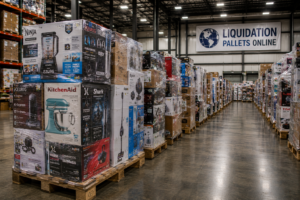

Every liquidation pallet is defined by where its stock came from. The same product category can be a completely different buying proposition depending on whether the lot is customer returns, overstock or shelf pulls. Here is what each term actually means — and which one suits your situation.
Customer returns
What it is: items shoppers bought and sent back — change of mind, wrong size, damaged box, or a fault.
Condition: genuinely mixed. Expect a spread from unopened items through to units needing repair. Electronics returns need testing before resale.
Price & risk: the cheapest per item and the highest variance. Profitable for buyers who can test, sort, and sell across multiple channels (working items on eBay, imperfect ones as parts/repair listings).
Best for: experienced resellers, or beginners choosing low-complexity categories like clothing where “testing” is just inspection.
Overstock
What it is: brand-new surplus a retailer never sold — over-ordered lines, cancelled orders, discontinued ranges.
Condition: new, typically in original packaging.
Price & risk: costs more per item than returns but is far more predictable — the main risk is market demand for the specific products, not condition.
Best for: first-time buyers and anyone selling on platforms where “new” condition commands a premium.
Shelf pulls
What it is: stock removed from shop floors — end-of-season lines, display items, packaging refreshes.
Condition: unused, though packaging may show shelf wear, stickers or markdown labels.
Price & risk: sits between overstock and returns. Great value when the products themselves are current and desirable.
Best for: clothing, footwear and homewares resellers — categories where a price sticker on the box doesn’t matter.
How grades appear on our listings
We grade at lot level: Grade A (like-new/unused), Grade B (fully functional, light wear or damaged packaging), Grade C (cosmetic damage or needs attention). A customer-returns lot may span grades — the listing describes the majority condition, and all liquidation stock is sold as-is, which is standard industry practice and reflected in pricing.
Which should you buy first?
If it is your first pallet: overstock or shelf pulls in a category you know. If you have testing capability and sales channels for imperfect goods: customer returns offer the deepest margins. Either way, read the FAQ, ask for the manifest where available, and check the delivery details before committing.
Browse current stock by condition and category at the Australian liquidation hub.